
Published: Updated:
As devastating storms flooded Maui and caused widespread damage last March, a Pennsylvania family canceled their beachfront Vrbo reservation. That was a logical decision they assumed would be covered by Vrbo’s extenuating circumstances policy. But the vacation rental’s third-party management company disagreed and refused to provide any refund.
After an unsuccessful credit card dispute over the rental fee, the family asked my fiasco-fixing team for help. They hoped I could convince Vrbo to force the host to refund the $3,497 spent on the rental.
But what does Vrbo’s extenuating circumstances policy actually cover, and was this refund request incorrectly rejected?
Consumer Rescue investigates.

Booking a Vrbo in Kihei, Maui — before the floods
At the end of January, Jennifer Peranteau’s family decided to head to Hawaii for spring break. The trip would be just the thing they needed after a long, gloomy winter in Pennsylvania. They pictured themselves spending their days relaxing by the ocean and soaking up the warm sun. Their two young children would build sand castles and collect seashells. Of course, at night, there would be luaus and Hawaiian sunsets.
The Peranteaus planned to find a vacation rental using Vrbo. They zeroed in on a condominium in Kihei on the island of Maui and selected a two-bedroom oceanfront unit. It would give them plenty of space and privacy to properly enjoy their tropical getaway.
It was going to be an unforgettable family vacation. Jennifer and her husband were sure of it.
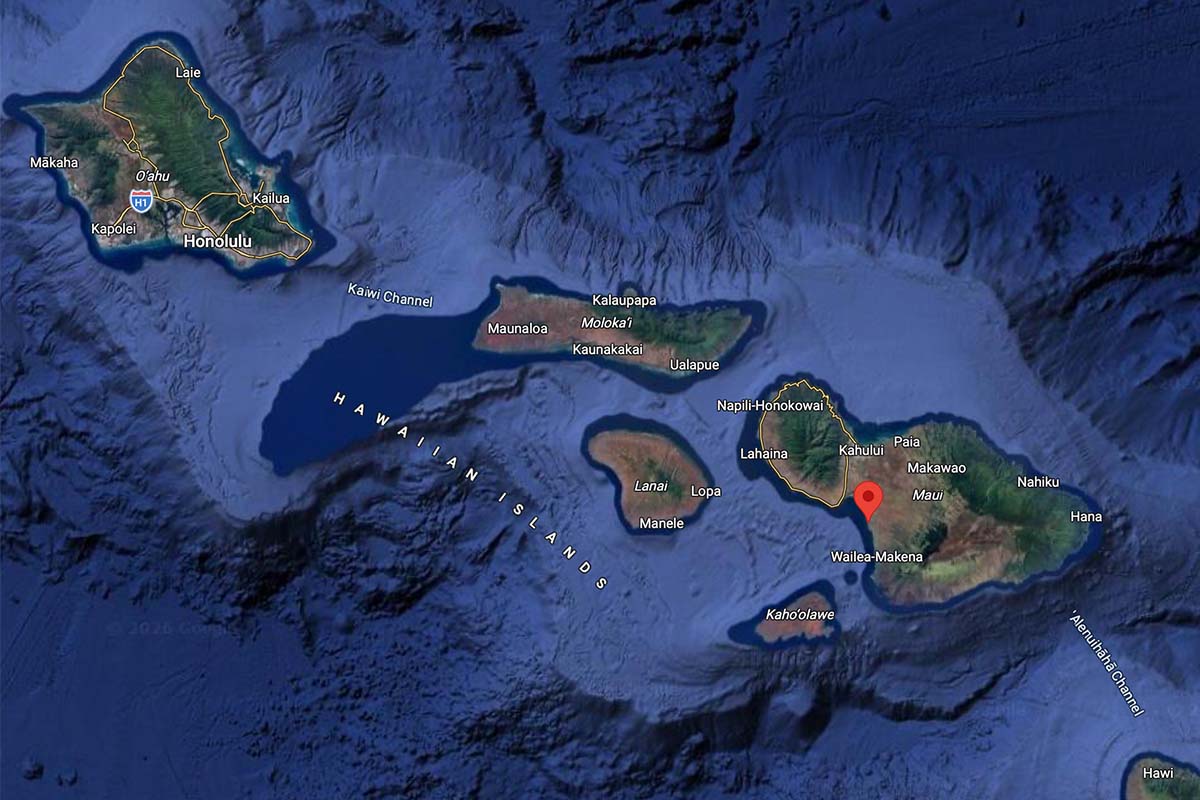
Historic Kona Storms hit the Hawaiian Islands
Unfortunately, Mother Nature had her own plans for Maui. The weather she dished out to the Valley Isle in March 2026 was relentless.
A week before the Peranteaus were scheduled to arrive, the first of two historic storms hit Maui. The resulting floods caused roads to collapse, sinkholes to open, and widespread property damage. Back in Pennsylvania, Jennifer watched news reports of the devastation with growing concern.
“The flood water was smashing cars on top of each other,” she recalled. “The road near our Vrbo had washed away and the public water lines were breached. The weather reports were calling for more rain.”
📬 Subscribe to:
Tales from Consumer Advocacy Land
Real stories. Real rescues. Real advice.
Join thousands of smart travelers and savvy consumers who already subscribe to Tales from Consumer Advocacy Land — the friendly weekly newsletter from Michelle Couch-Friedman, founder of Consumer Rescue. It's filled with helpful consumer guidance, insider tips, and links to all of our latest articles.

In fact, the rain and flooding continued for the next few days.
“It looked like we should cancel,” Jennifer told me. “I was relieved to know that Vrbo’s extenuating circumstances policy would allow us to cancel for a refund.”
Jennifer was about to find out that her interpretation of Vrbo’s extenuating circumstances policy was diametrically opposed to the host’s.
And according to Vrbo, the only opinion that mattered was the host’s.
Trying to determine the conditions in Kihei
Before making the final decision about the cancellation, Jennifer called friends on Maui to get their opinion. They encouraged her not to come to the island.
“They said it wasn’t the right time to vacation on Maui,” Jennifer told me. “It was still raining, and additional flooding was expected.”
So that afternoon, six days before the family was scheduled to check into the Vrbo, Jennifer contacted the management company, AA Oceanfront Rentals. She expressed her opinion that Maui, specifically Kihei, was not prepared for tourists.
The responding email was not particularly reassuring. In what I suspected was an AI-generated message, Jennifer was told the company was monitoring the situation, but that everything was fine.
Unconvinced, Jennifer asked the management company to send real-time photos or video of the property. She explained that she could not put her children in danger by bringing them into an area with active flooding. Instead of photos to alleviate her concerns, she received a reminder that her reservation was nonrefundable.
Aloha, The flood has subsided and the roads are clearing. The property is okay. At this time, the property remains open and accessible. Your reservation is currently within the nonrefundable window under the policy agreed to at booking. Mahalo.
AA Oceanfront Rentals (host of the Vrbo)
Despite the robotic message about the improving conditions around the Vrbo rental, live news reports filmed on the same day told a different story.
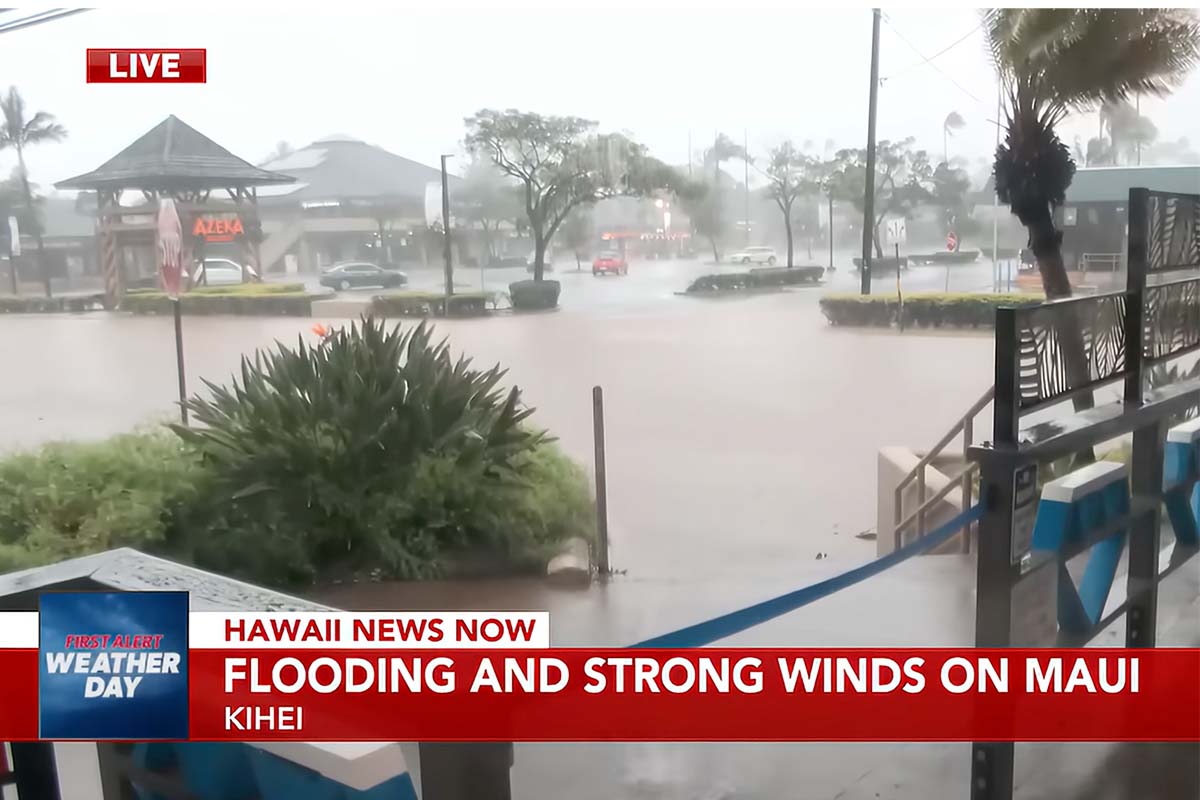
At the same time, other news outlets were broadcasting even more alarming images from Kihei.
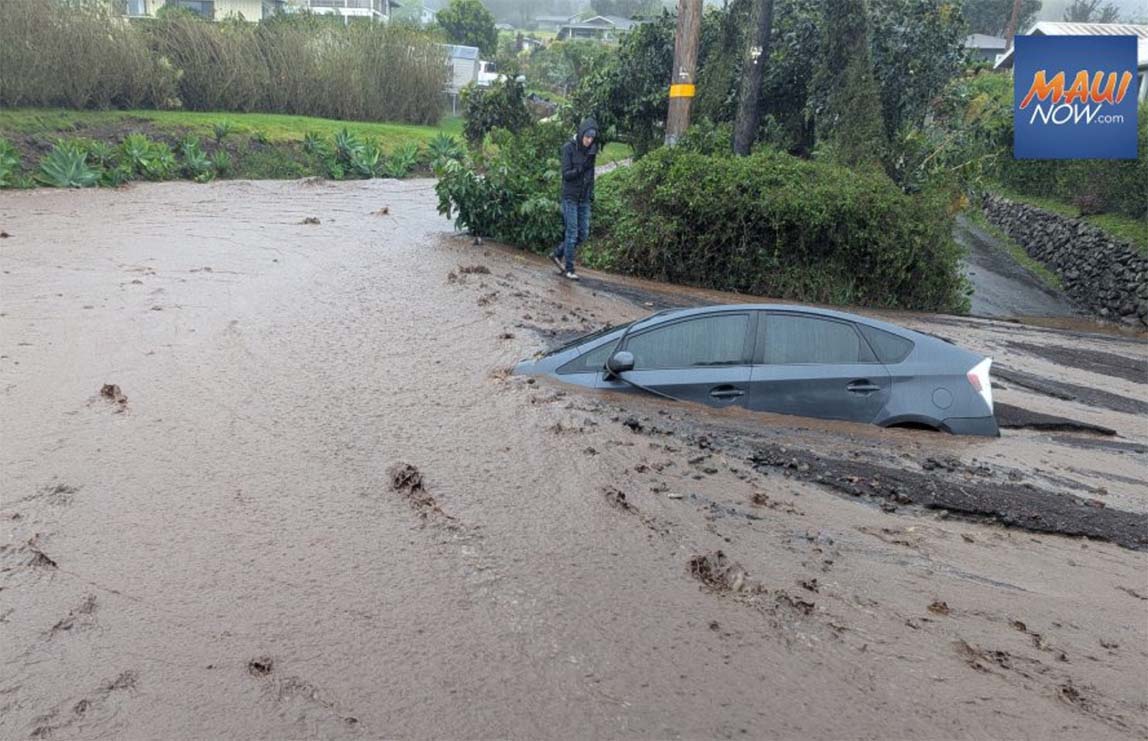
Vrbo guests hope to cancel under the extenuating circumstances policy
After a second storm was forecast to hit the area, the Peranteaus made the final decision to cancel their trip to Kihei. Jennifer sent another message to the management company of the Vrbo rental.
“We want to cancel. I don’t think it’s safe, and we also don’t want to be in the way of the cleanup,” Jennifer explained. “Other vacation rental hosts are allowing cancellations with refunds. We would appreciate the same courtesy. Are you willing to offer any flexibility?”
There would be no flexibility.
“Sorry, per contract, we are not able to make any changes within 30 days prior to the arrival date. If you have purchased travel insurance, you may give them a call and file a claim.”
Jennifer had not purchased travel insurance. She had been under the impression that the Vrbo’s extenuating circumstances policy would be all the “insurance” her family needed.
Her next message was to Vrbo to report the host for refusing to honor a refund request under that policy.
Related: Our Vrbo is filled with rats! We want to leave and get a refund
A third-party Vrbo partner makes its own refund decision
A sympathetic Vrbo agent explained to Jennifer that the refund would be at the host’s discretion. This was the first time Jennifer learned that the way she booked the rental on the Vrbo site might impact her ability to qualify for a refund.
“This host is a third-party partner with Vrbo,” the Vrbo agent explained. “You have a separate contract with that company, and that’s what determines your refund eligibility.”
He put Jennifer on hold while he attempted to negotiate a refund with the host. When he returned, he had bad news. The Vrbo agent had received the same answer as Jennifer. AA Oceanfront Rentals would not agree to a refund.
Vrbo agreed to refund the only thing it had charged Jennifer for the rental — the $437 service fee.
Incredulous that this could be the final outcome, Jennifer asked what else she could do to get her money back.
The Vrbo agent recommended that she file a credit card dispute. So she did.
Why the Vrbo guests could not win a credit card dispute
There was no way that Jennifer could win this credit card dispute.
The Fair Credit Billing Act protects credit card users from fraudulent charges and billing errors. That is the entire scope of protection. The charges on Jennifer’s credit card were neither. Not only that, but despite what many consumers believe, the outcome of a credit card dispute is not legally binding. Winning a chargeback only guarantees that the charge will not reappear on the consumer’s credit card account. The merchant can still pursue the debt elsewhere.
Related: Here’s how winning a credit card dispute can end with you in jail (my report for Fodor’s Travel)
Often, consumers win credit card disputes simply because the merchant doesn’t respond to it. In fact, many companies in the travel industry don’t respond to chargebacks. However, later, after the customer feels confident they’ve been victorious in their battle, they learn the truth — they still owe the money. The extra bonus is usually a permanent banishment from the company and a credit rating hit.
However, in Jennifer’s case, AA Rentals did respond to the dispute. In its rebuttal to the credit card dispute, AA Oceanfront Rentals provided a copy of the contract Jennifer had signed.
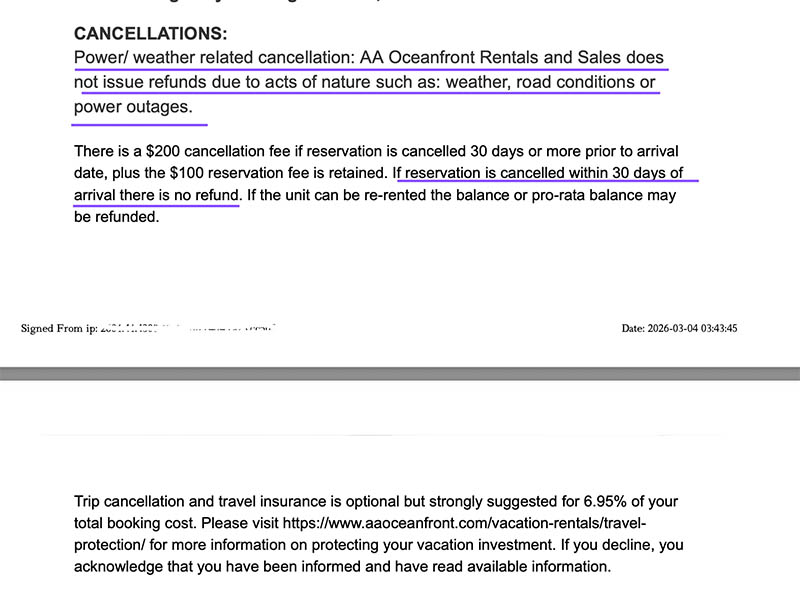
Additionally, the management company noted that it had recommended that the Vrbo guest purchase travel insurance to protect her vacation investment. Jennifer had declined.
Citi found in favor of AA Oceanfront Rentals and rebilled the $3,080 she’d paid for the rental her family never got to enjoy.
Related: Hate your shore excursion? Here’s why filing a credit card dispute won’t work
Asking Consumer Rescue for help
After losing the credit card dispute, Jennifer went back to Vrbo to ask for reconsideration of her refund request. That turned out to be a dead end.
With nowhere else to turn, she sent a request to the Consumer Rescue team.
“Vrbo told me that if I didn’t win the credit card dispute, their team would help me,” Jennifer told me. “But that didn’t happen. Can Consumer Rescue help me?”
After reviewing Jennifer’s paper trail, I was fairly certain that a refund was not in the cards for her family.
Vrbo would have required AA Oceanfront Rentals to refund the Peranteaus if there had been a mandatory evacuation of Kihei and the surrounding areas in the days just prior to the reservation. But that didn’t happen. Despite the devastating impact of the two storms, conditions never reached evacuation levels. As a result, Vrbo’s extenuating circumstances policy didn’t apply.
Related: Why did this Vrbo host put us in a flophouse? We want a $12,000 refund!
“I should have purchased travel insurance!”
Then there was the contract from the third-party rental agency, which explicitly states that it will not refund weather-related cancellations. In fact, the contract states that even if a guest can’t reach the Vrbo due to road conditions or power outages, they won’t receive a refund. It’s a decidedly rigid and unfriendly policy for travelers. Had Jennifer read those terms before booking, she may have reconsidered that particular Vrbo. Unfortunately, she didn’t.
By the time she reached out to me, she was kicking herself for not purchasing travel insurance. Jennifer believed that the decision had cost her family over $3,000. The reality, though, is that in this case, for the same reasons Vrbo’s extenuating circumstances policy didn’t kick in, travel insurance might not have been a slam-dunk for protection.
However, the images from Maui in the week before their scheduled reservation would have made any parent cancel.
But I wondered what the Vrbo executive resolution team would make of this family’s situation.
Related: If your vacation rental is filthy, can you just leave (and get a refund)?
Vrbo offers a bit of good news for these customers
I reached out to the Vrbo executive resolution team. These are not customer-facing executives; rather, problem solvers I can reach as a member of the media and a consumer reporter.
Soon, I had a little good news for the Peranteaus.
Hi Michelle,
Thanks again for reaching out. Traveler safety is always a top priority, and we recognize the difficult decisions guests must make when faced with unpredictable events.
While severe weather can be disruptive, they do not override the cancellation policy set by the host and agreed to by the guest at the time of booking. Guests needing to cancel or modify a reservation outside the policy window are encouraged to work directly with the host. We encourage hosts to be as flexible and accommodating as possible in these situations.
Vrbo’s Extenuating Circumstances Policy outlines specific criteria under which refunds may be granted. In this instance, the policy was not activated, and decisions were made in accordance with our standard policies and the information available at the time.
In reviewing this situation, the host confirmed that the property was in good condition and was not impacted by the weather. We reached out to the host on Ms. Peranteau’s behalf regarding a refund, however the request was declined, and Vrbo follows our partner’s policies.
Given the circumstances, we are adding OneKeyCash to Ms. Peranteau’s account in addition to the traveler service fee previously refunded, which is the amount we make from the transaction. We are sharing this update with Ms. Peranteau directly.
We appreciate your understanding. (The Vrbo executive resolution team)
In the end, Vrbo issued the Peranteaus a $1,841 OneKeyCash credit as a goodwill gesture, plus a cash refund of the Vrbo fee. OneKeyCash can be redeemed on Expedia and any of its partners, including, of course, Vrbo.
Related: I locked myself out of my Airbnb rental. Why won’t the host let me back in?
Although the loss of their dream Maui vacation and their $3,000 still stings Jennifer is happy to put this situation to rest.
Hi Michelle,
While this is not a refund nor 100% of our loss, it is certainly not insignificant, and I am grateful for the effort you put into helping me to resolve this.
Lessons learned on many fronts! I know we will never take a trip again without travel insurance.
We really are thankful for your help here as I’m not sure we would have made any additional progress without it.
Thank you again!
Sincerely,
Jennifer P.
Related: If you hate your vacation rental, can you leave and get a refund?
Vrbo’s extenuating circumstances cancellation policy in 2026
The updated extenuating circumstances cancellation policy is a welcome change for Vrbo guests. However, the situations it actually covers are relatively limited and misunderstandings about the policy are common.
Here’s what you need to know before you cancel a Vrbo reservation and invoke extenuating circumstances.
The following are covered events that will allow a Vrbo guest to cancel and receive a full refund.
Related: How to easily lose $500 to a vacation rental scam? Pay with Zelle
1. Natural disasters and extreme, unusual weather events
Vrbo’s policy specifically notes that if the location or the season is known for unusual weather, then a guest can’t claim an extenuating-circumstances cancellation. For instance, if you travel to the Caribbean during hurricane season, you won’t be eligible for a refund if you’re forced into a weather-related cancellation.
Additionally, flooding or other extreme weather must be specific to the exact location. If access to the Vrbo rental is available and the property isn’t affected, the extenuating circumstances policy doesn’t apply.
2. Publicly declared health emergencies
There has been a distinct change in Vrbo’s stance on publicly declared health emergencies since COVID. During that time, guests were frequently told that they would be ineligible for a refund if they canceled. This was true even when the properties were ineligible to receive guests due to local health restrictions.
Today, Vrbo’s policy makes it clear: If a property’s location is under an official health emergency, the host must issue a refund. Note: The policy cannot be invoked if the situation was already declared before the reservation was made.
3. Government-imposed travel restrictions
If a government-imposed travel restriction makes it impossible for a guest to go from their home to their Vrbo rental, the host must allow the cancellation for a full refund.
4. Declared war, acts of terrorism, or civil unrest
In the event of unexpected acts of war, terrorism, or civil unrest that make it unsafe to travel to or stay at the Vrbo, the extenuating circumstances policy applies. However, if one of those conditions were already present before the reservation was made, then it can’t be used.
5. Changes to passport or visa requirements
If there are entry requirement changes after a guest makes a Vrbo reservation that make it impossible to travel to the destination the policy can be applied. However, since most passport and visa requirement changes happen far in advance, a host may challenge a guest who invokes the extenuating circumstances policy under this condition.
Note: A guest who neglects to check the destination’s entry requirements until the last minute and finds out they can’t travel cannot claim extenuating circumstances. This clause specifically covers sudden changes to passport and visa requirements.
Related: Brazil visa rules: Celebrity cruise denied boarding to over 100 passengers
6. Prolonged outages of core infrastructures
Widespread, prolonged outages of core infrastructures like electricity or water at a Vrbo are covered by the extenuating circumstances policy. Likewise, if widespread travel disruptions make it impossible for a guest to reach the vacation rental, Vrbo requires the host to provide a refund.
Travel insurance can cover other types of Vrbo cancellations
It’s important to note that any event not listed as an inclusion is generally excluded from qualifying as an extenuating circumstance under the Vrbo policy. Most notably, your personal circumstances are not covered. That means if you get sick or injured, lose your job or there’s a death in your family, you can’t cancel your Vrbo and receive a refund.
But the good news is that travel insurance will cover all those types of events and more.
Related: Here is an $11,504 travel insurance mistake you won’t want to make
The Vrbo extenuating circumstances cancellation policy is not an alternative to, or a replacement for, travel insurance. The reality is that most unexpected calamities that might cause you to cancel your vacation rental are not covered. So don’t overlook your need for travel insurance to protect all your nonrefundable payments for your trip.
You can compare various travel insurance policies on Squaremouth or Insuremytrip before purchase. Make sure to verify that what you’re buying covers what you want to be protected for.
The bottom line
Vrbo’s extenuating circumstances cancellation policy is meant to protect guests from unexpected, mostly widespread events that impact large swaths of travelers. Its scope is limited. Here’s how to protect yourself from a loss:
- Insure your trip.
- Before canceling and claiming extenuating circumstances, contact your host and Vrbo to make certain your cancellation qualifies.
- Safety first — whether or not your cancellation is covered. If your gut says a situation isn’t safe, don’t go.
Of course, if you think that Vrbo or any other company has misapplied their policies to your situation, you have a secret weapon. Consumer Rescue is here to help you. Send your request to our team, and we’ll investigate, and we may be able to help you, too. Our mediation assistance is always fast, friendly, and, of course, free of charge! (Michelle Couch-Friedman, Chief Fiasco Fixer and founder of Consumer Rescue)
Before you go: Help! My all-inclusive resort is missing the inclusive part