
Published: Updated:
People either love Facebook or hate it. An increasing number of former users are leaning toward the latter and pressing the eject button. In their place, though, swarms of scammers have moved in. The bad actors create “helpful” Facebook groups, lurk in Direct Messenger, advertise non-existent products, and stalk the Marketplace for victims. Their only intention is to con as many legitimate Facebook users as possible before being detected — and banned.
I know this because my case files are brimming with victims of scams originating on Facebook. Here’s how you can use the social media giant safely and spot the fraudsters before they spot you.
Fact: No one is vetting those flashy Facebook ads
One of the biggest misconceptions Facebook users have is that Meta carefully vets the ads on the platform. The reality is that Facebook ads are super cheap, simple to set up and the approval process is cursory. That makes it easy for anyone — including scammers — to pay a few dollars and reach a large audience.
Even worse, modern AI programs allow con artists to create advertisements with realistic live-action testimonials from nonexistent customers. Sometimes endorsements are simply stolen from real websites to convince Facebook users of a product’s quality and value.
Facebook users are being tricked by these ads. In some cases, the subpar products arrive (usually from China) weeks and even months after payment. But in most complaints I receive, the victims of this scam received nothing at all.
Mike Hennelly’s experience falls into that category.
Here’s how the Facebook Ad scam works
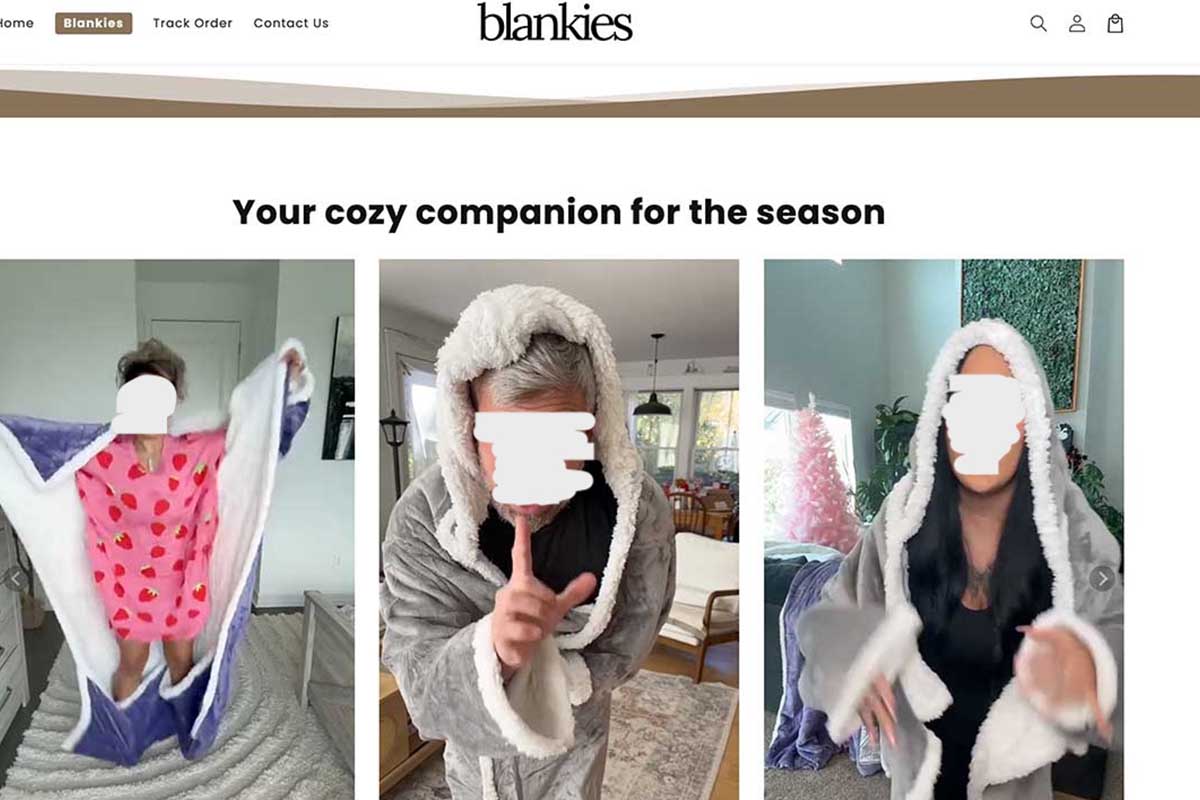
On a particularly cold evening last fall, Hennelly was looking through Facebook. Suddenly, a colorful ad appeared for wearable fuzzy blankets. He stopped his scroll and had a look at the advertisement for a company called “Blankies.”
Blankies had accrued many enthusiastic positive reviews from happy customers. The attached video showed the comfy electric blanket in action. Everyone — men, women, children — had fabulous things to say about it.
Hennelly watched the ad a few times and then scrolled on.
Watch a Facebook ad, get bombarded with more
But by watching it, he had signaled to Facebook that he might just be in the market for a blanket. Soon, advertisements for blankets, including Blankies, began to flood his newsfeed. Each time that original ad appeared, Hennelly watched it again. That caused Facebook to increase the delivery of that ad to him.
📬 Subscribe to:
Tales from Consumer Advocacy Land
Real stories. Real rescues. Real advice.
Join thousands of smart travelers and savvy consumers who already subscribe to Tales from Consumer Advocacy Land — the friendly weekly newsletter from Michelle Couch-Friedman, founder of Consumer Rescue. It's filled with helpful consumer guidance, insider tips, and links to all of our latest articles.

“All the reviews were positive,” Hennelly recalled. “The advertisement and website showed many people wearing it and it was on sale.”
The $39 limited-time price tag finally convinced Hennelly he should buy one of those hooded robes/ blankets. Pulling out his credit card and entering all his information, Hennelly only had one choice left to make. What color would his Blankie be? The item came in an array of colors, but he settled on a muted brown to enjoy his winter months in.
After payment, he received a confirmation email that noted delivery of his Blankie within 7 days.
Like magic, when he returned to Facebook, Meta stopped showing him blankets. Instead, new products having to do with keeping warm in the winter appeared in his newsfeed. Although the algorithms didn’t know it yet, Hennelly was done shopping. Now he was looking forward to receiving his new, high-quality wearable blanket.
As you probably already guessed, he would not end up on the Blankies happy-customer testimonial page.
Why is this Blankie taking so long to arrive?
Hennelly waited exactly seven days before emailing the company and asking when he should expect his Blankie.
Hi Mike,
Thank you for reaching out!
I’ve checked your order, and I want to reassure you that it’s still in progress. We recently went viral, which caused a sudden surge in orders, and our production team has been working nonstop to keep up with demand.
Your order is included in the upcoming production batch and will ship out as soon as the new inventory arrives. Once the carrier updates your tracking information, you’ll receive the notification automatically by email.
Thank you so much for your patience — we truly appreciate your support during this busy time. If you need anything else, I’m here to help!
Kind regards,
Juliana
Customer Support — Blankies
A week later, he emailed again and asked for an update. This time, Juliana told him that as soon as more products were received, he would be the first in line to get a Blankie.
“Your order is all queued and ready when the inventory arrives,” Juliana assured him.
But by now, Hennelly had a bad feeling about his Facebook shopping experience. He waited just a few more days before emailing Juliana again.
“When am I going to get my blanket?” he asked.
To Hennelly’s surprise, Juliana confirmed he had already received the Blankie. She even had a photo of his front porch with the package on it, she said.
That’s when things really got weird.
Related: Here’s why you should never give an eBay buyer your home address
Not really proof of delivery
Hennelly told Juliana that no Blankie had been delivered to his house, and he asked to see her photo.
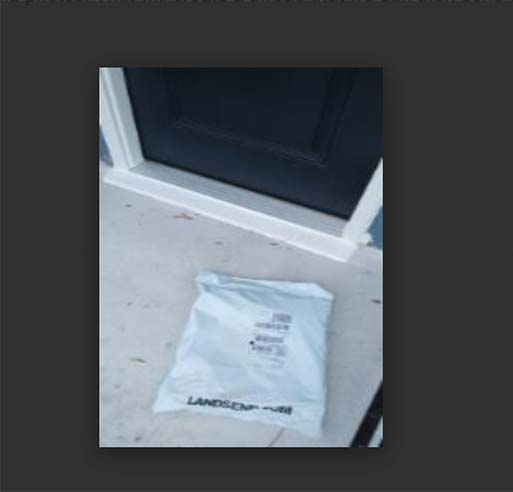
When Hennelly had a look at her proof of delivery, several things were instantly evident. That wasn’t his porch, there was no way a Blankie could fit in that envelope and, most clearly, he had been scammed.
It also became clear that Juliana was an AI-powered customer service agent set up by the scammer. “She” had no real intent to provide any such service. Confronted with Hennelly’s problems with her photos, Juliana suggested that one of his neighbors might have received it.
“This is almost certainly an error on UPS’s part,” she told Hennelly. “I suggest you check security cameras in your neighborhood.”
This unhelpful bot then told Hennelly she would open up an investigation after he completed his due diligence.
But Hennelly had enough, he no longer wanted a Blankie. He just wanted his money back. So he opened an investigation of his own — with Consumer Rescue.
Consumer Rescue investigates: What do these photos show?
I had a look at Hennelly’s proof-of-delivery photo and agreed that there was no way one of those fluffy Blankies could fit in that envelope. It was unusual that Juliana did not share the same perception. I decided to have a closer look at this online company.
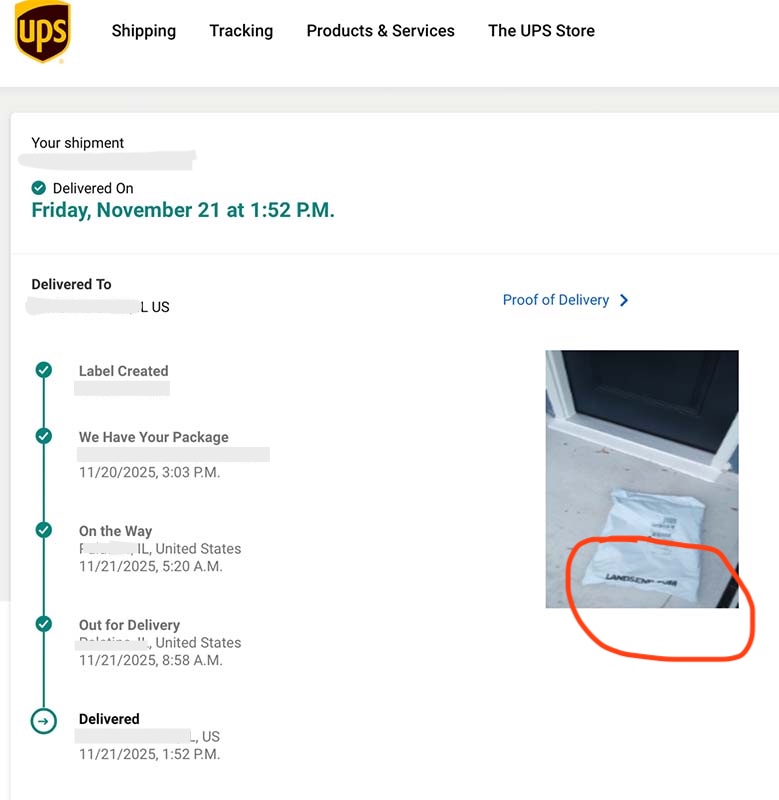
First, I added the tracking information for that package into the UPS system to see where it originated. That’s when the entire facade of the Blankies store came crashing down.
There was a full-resolution photo of the delivery on that porch inside the UPS tracking system. In that photo, which I enlarged, the actual company that sent the package is visible: Lands End. And the originating point of that envelope was in Wisconsin, where Lands End operates a giant warehouse.
Then I dropped some still shots from Blankies’ testimonial page on its website into Google Images. It came as no surprise to me that all of the photos had been lifted from elsewhere. On TikTok, a wearable blanket with a different name was being highly promoted by the same “people” who may or may not be AI-generated. But, just as that envelope was not associated with a company called Blankies, neither were these TikTok videos.
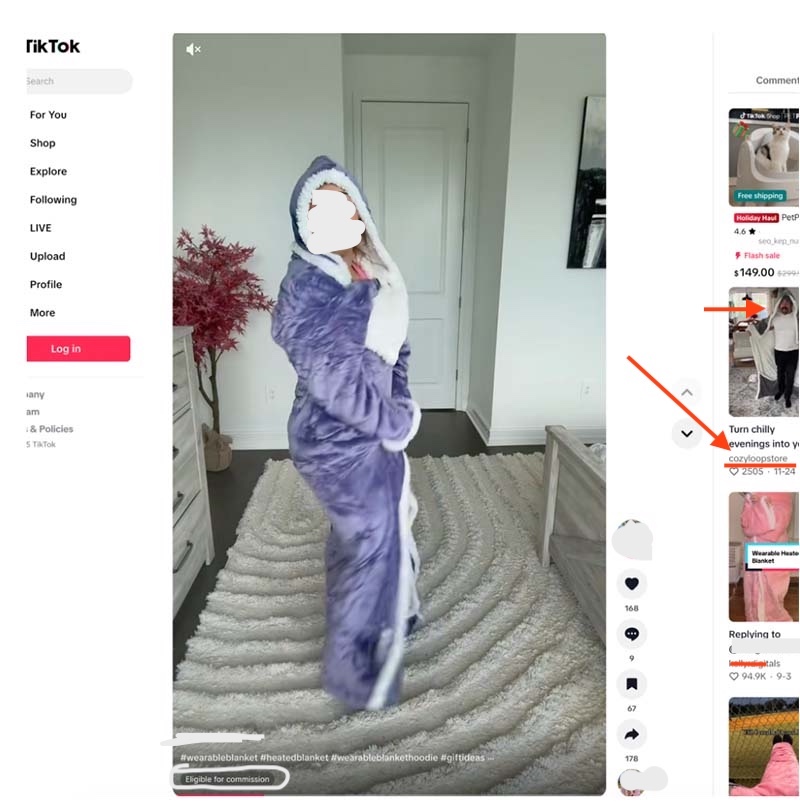
There were hundreds of TikTok videos promoting this item and each testimonial called it something else. Many of the videos had all the telltale signs of being AI-generated; the lips weren’t in sync with the words, the cadence of the sentences were off, and background images were disproportionate.
Related: Surprise! Here’s your Punchbowl invitation — to a scam
Important information that ICANN reveals about a website
I had learned a lot about Blankies, but I had one more place to visit to get a full picture of this company: ICANN.
ICANN (Internet Corporation for Assigned Names and Numbers) is a fabulous place to find out important information about an online entity before you patronize it. Things like:
- Who hosts the website?
- How long has it been live?
- Has it changed names recently?
- What country is its server in?
- Where can you file an abuse complaint about the site?
In the case of the Blankies, I discovered the website had been created just days before it ran the Facebook ad that Hennelly had found irresistible.
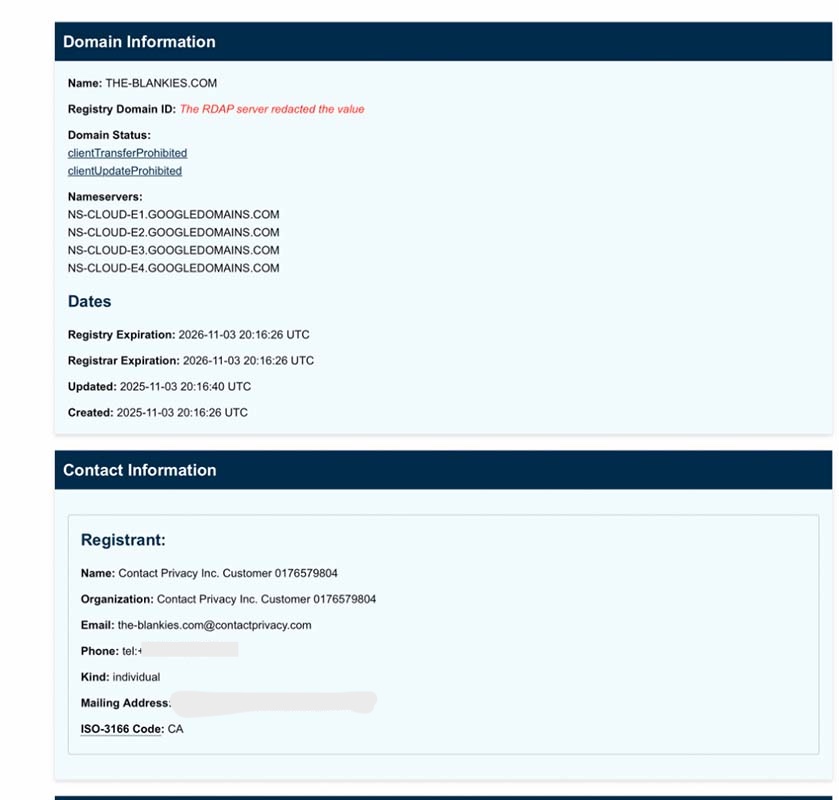
I had seen enough. It was time for me to reach out to Juliana’s boss.
Related: Consumer alert! This 11-million-dollar inheritance scam comes by snail mail
Who is really running this Facebook ad?
By the time Hennelly had reached out to me, he had already complained to Facebook about the ad. It is very likely others did as well. All traces of Blankies had been entirely erased from Facebook. This follows a typical pattern for scammers on social media platforms. They set up “shop” under one name, catch a few victims, get caught and booted…and then return under a new moniker. Wash, rinse, repeat. It’s an endless cycle for these predators.
Just for fun, I sent a message to Juliana and the administrator of the website, which was still live at that time.
Hello there!
I’m a consumer reporter and ombudsman columnist investigating a complaint about your “company.” I note that you’ve just launched this business in early November and then placed Facebook ads to sell your product.
Mike Hennelly responded to your advertisement and bought one of your blankets last month. After a bit of a delay, you sent him confirmation that UPS had delivered the blanket. However, the information and photo confirmation associated with the shipping label have nothing to do with your company or Mr. Hennelly.
Lands End sent the package in the photo. I’m not sure where your company obtained that shipping information, but it doesn’t appear to be from your internal documents.
At this point, Mr. Hennelly wants you to return his money. He does not want to do business with you. I am unclear on your company’s legitimacy and whether you’re shipping blankets, but you didn’t send one to Mr. Hennelly. Thank you for your attention to this matter.
Michelle Couch-Friedman, Consumer Reporter
Related: Help! I think a scammer sold me a $10,767 World Cup ticket on StubHub
Reporting the merchant to Shopify
As I wasn’t expecting a response from Blankies, I moved on to stage 2 of this plan to shut it down. Since Shopify was hosting the site, I assumed that the company would want to know about the scheme.
Mike Hennelly responded to an ad on Facebook from Blankies, which is hosted on Shopify.
He purchased one of these electric blanket robes on November 7 for $39. Two weeks later, after he repeatedly asked for a shipment invoice or estimated delivery time, someone emailed him from a regular Gmail account and gave him a UPS tracking code, which, on Nov. 21, confirmed delivery and included a photo. But the photo had nothing to do with “Blankies” or Hennelly.
The information included from UPS shows that the package originated in Wisconsin, where Lands End is headquartered. The package is clearly labeled Lands End, and it is a small package that could in no way contain a large electric blanket robe.
The Blankies’ agent has stopped speaking to Hennelly and blamed the confusion on “going viral.” I don’t believe this website went viral. It is a scam. Records show that the website went live on Nov. 3, and the Blankies page on Facebook seems to have already been removed. The website, hosted on Shopify (Shrine), is filled with lifted images from other websites (as confirmed by Google reverse image search) and is currently live.
Would you be able to have a look at this website and see if it appears to give any indication of being a reputable or legitimate merchant, or if it should be removed? Thank you.
Very shortly afterward, Shopify removed the Blankies website. And Hennelly got his money back via a credit card chargeback. He’ll stick to the warm blankets he already has going forward.
Related: Facebook users, beware of the government grants scam — that’s not a friend in your DM
Here’s how to make sure the Facebook ad you’re responding to isn’t a scam
My case files are filled with complaints from Facebook shoppers. When I review their paper trails, the red flags they missed are often glaring. These cases might give you the impression that no legitimate companies advertise on Meta.
But I have a confession. I frequently buy things through ads I see on Facebook. Over the years, I’m batting close to 1,000 with my purchases. That’s because even though Facebook doesn’t vet the companies that advertise on its platform, I do.
Here’s all you need to know about vetting Facebook ads, so you can shop safely and enjoy the discounts that can be found there.
Related: How did I lose my credit card dispute against this online scammer?
Does the advertiser have a website?
In 2026, nearly every legitimate company in the world has a website. So the first red flag for an advertiser on Facebook is a lack of a website. Lazy scammers don’t bother creating a company website. They conduct their entire scheme via Facebook ads.
If there is no digital footprint of a company other than an ad on Facebook, keep scrolling. It’s likely a scam.
An advertiser who offers ridiculously low prices
If a Facebook advertiser is selling a product at TEMU prices — way below any reasonable value for the item — that’s a trap. These scammers are all about quantity. Keeping the price tag very low is a tactic to get as many victims as possible in the quickest amount of time. These fraudsters know that if they keep the costs small, many consumers will just forget about it if the item isn’t received. That low price helps them fly under the radar.
How long has the company been in business?
You can use ICANN the same way I do. Before buying anything online, put the URL in the ICANN Lookup. Remember to only enter the domain name, not the https prefix. So, for instance, if you were looking up Consumer Rescue, you would just enter: ConsumerRescue.org.
If an online business is just days, weeks, or months old, it’s best to avoid it until it has some time to prove itself. Scammers create websites with the sole purpose of quickly victimizing a few people and then moving on. Getting shut down is par for the course. They simply change the name, domain, and start over. You should always exercise extra caution when dealing with a company if its domain is very new.
Look for reviews and citations
Scan the internet for reviews of the company, and don’t trust self-promotion. Equally, anonymous reviews on Reddit and similar sites are not particularly helpful. Look for citations on Yelp and Trustpilot.
If you want to go further in your research, take some of the photos you see on the website and drop them in Google Images. You want to know if they’ve been used to create other websites or if they are truly unique. Remember, scammers often put up websites using parts of previous websites they’ve abandoned. They also sometimes create multiple similar websites with slightly different names to increase the size of their net as they hunt for victims. You may discover those duplicates through Google Images.
You might like: Could you be banned from Facebook forever? (Hint: Yes)
Only use credit cards to shop
The Fair Credit Billing Act (FCBA) protects consumers who shop with credit cards. Scammers hate credit card-using customers because there is always a risk of a chargeback taking back their booty. If you want to buy an item that you see advertised on Facebook, but the merchant wants you to pay with Zelle or some other unconventional way, move on. That’s a scam. Remember, instant money transfer apps do not have any purchase protection. If you receive a piece of junk, or nothing at all, you will not be able to get your money back.
Always pay for consumer products and services with a credit card to receive the protections provided by the FCBA.
The bottom line
Not everyone on Facebook who is selling or promoting something is a scammer.
The ads you see there can be a great way to discover small, unique companies and items that you might not otherwise learn about. Even better, there are often Facebook discount codes for buying via the platform.
But it’s crucial to do your due diligence before pulling out your payment method. If you don’t, you could be in for a shopping fiasco that could be easily avoided.
Oh, and as I was writing this article this week, I heard from Hennelly again. Apparently, his experience with Blankies didn’t sour him from Facebook Shopping. It also didn’t teach him any particular lesson, I’m afraid.
“Michelle, I think I’ve been scammed again. I bought this thing, and it says it has been delivered to my house in Los Angeles.” Mike lives in Illinois.
Here we go again…
(Michelle Couch-Friedman, Chief Fiasco Fixer and founder of Consumer Rescue)